
Acumatica Transportation Management System — TMS that scales alongside your growing order volume.
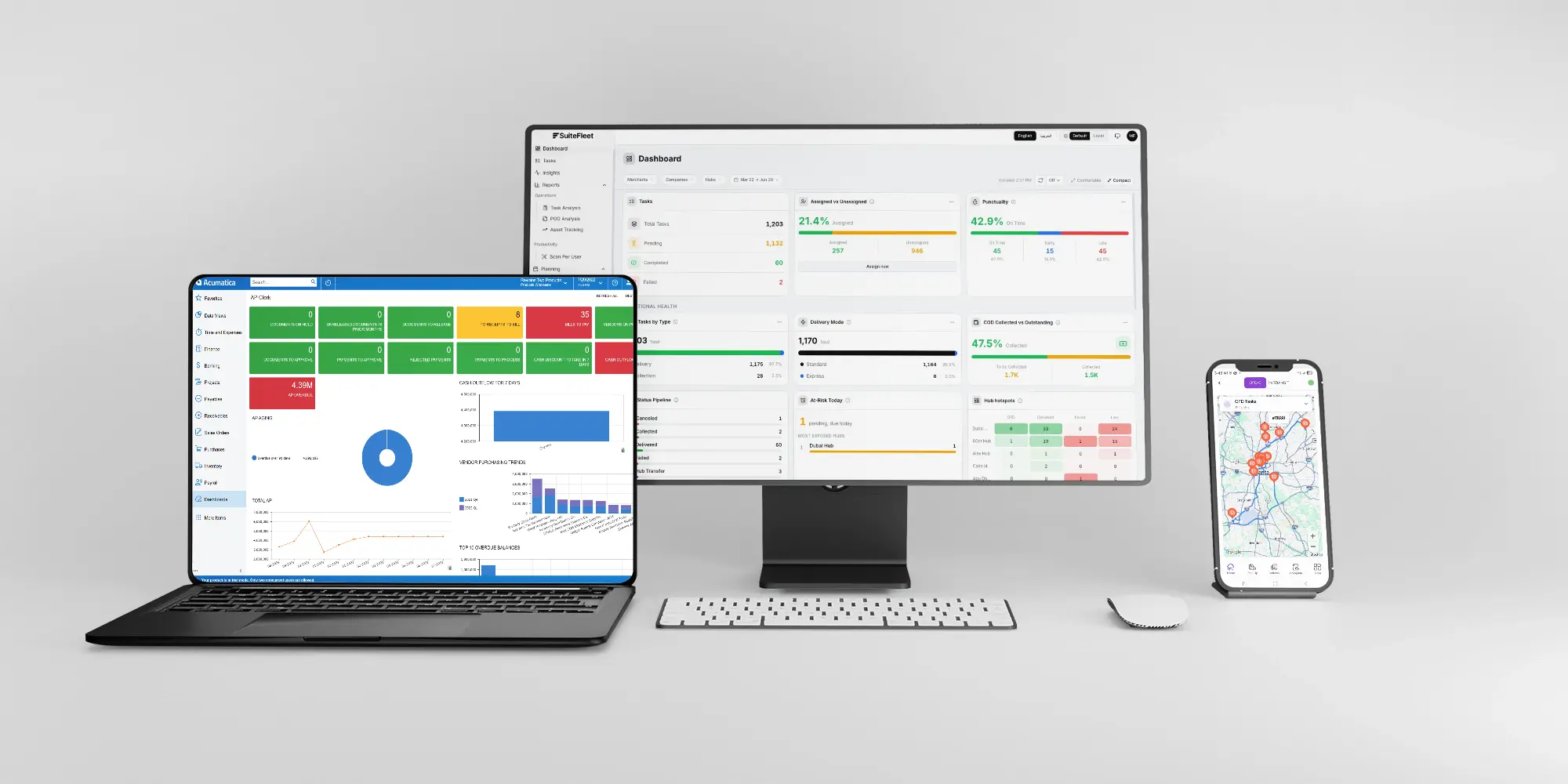
Acumatica has no transport management capability at all. SuiteFleet fills that gap, growing from 10 shipments a week to 200 or more.

.webp)


What Acumatica Manages, and What It Cannot:
Acumatica's financial management, distribution, and commerce modules handle orders, inventory, and accounting with real depth for growing mid-market businesses. As shipment volumes climb from dozens to hundreds a week, there is no load consolidation, no carrier rate comparison, no route optimization, and no per-shipment cost visibility anywhere in the platform.
What Changes When Acumatica and SuiteFleet Are Connected:
- Load optimization: orders consolidate into efficient loads instead of shipping individually, wasting vehicle capacity.
- Carrier automation: rate shopping and booking replace unsustainable phone and email coordination once volume passes 30 to 40 shipments a week.
- Route optimization: delivery routes planned algorithmically instead of manually, cutting distance, fuel, and driver hours.
- Cost visibility: per-shipment, per-carrier, and per-route cost data replaces monthly freight totals, dropping average cost per shipment by 26%.
- Acumatica writeback: freight costs, delivery confirmations, and POD data post back automatically for financial reconciliation.
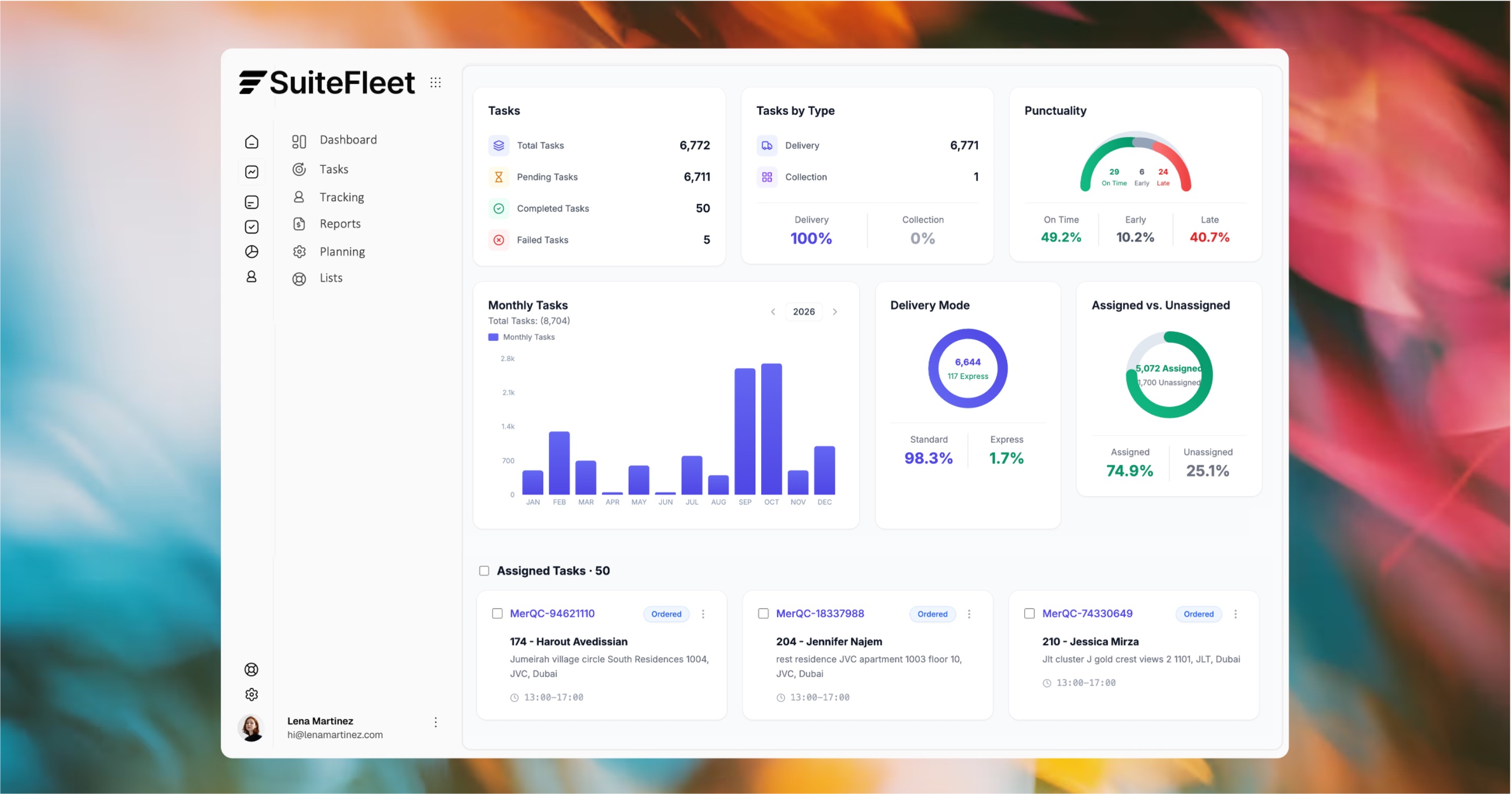

Acumatica scales your orders. SuiteFleet scales the transport behind them.

Who This Is For:
Growing businesses on Acumatica, particularly Distribution and Commerce editions, whose shipment volume has outgrown manual carrier calls and spreadsheet-based routing.
Technical Integration Details:
Connects via the Acumatica REST API and contract-based web services. Sales orders, shipment data, and warehouse release information sync automatically, with freight costs and delivery confirmations posting back for financial reconciliation.
How It Works (steps):
- Sales orders and shipment data sync from Acumatica when orders are ready for transport.
- SuiteFleet consolidates orders into loads, compares carrier rates, and optimizes delivery routes.
- Freight costs, delivery confirmations, and POD data post back to Acumatica automatically.




.svg)


.svg)
.svg)
.svg)