
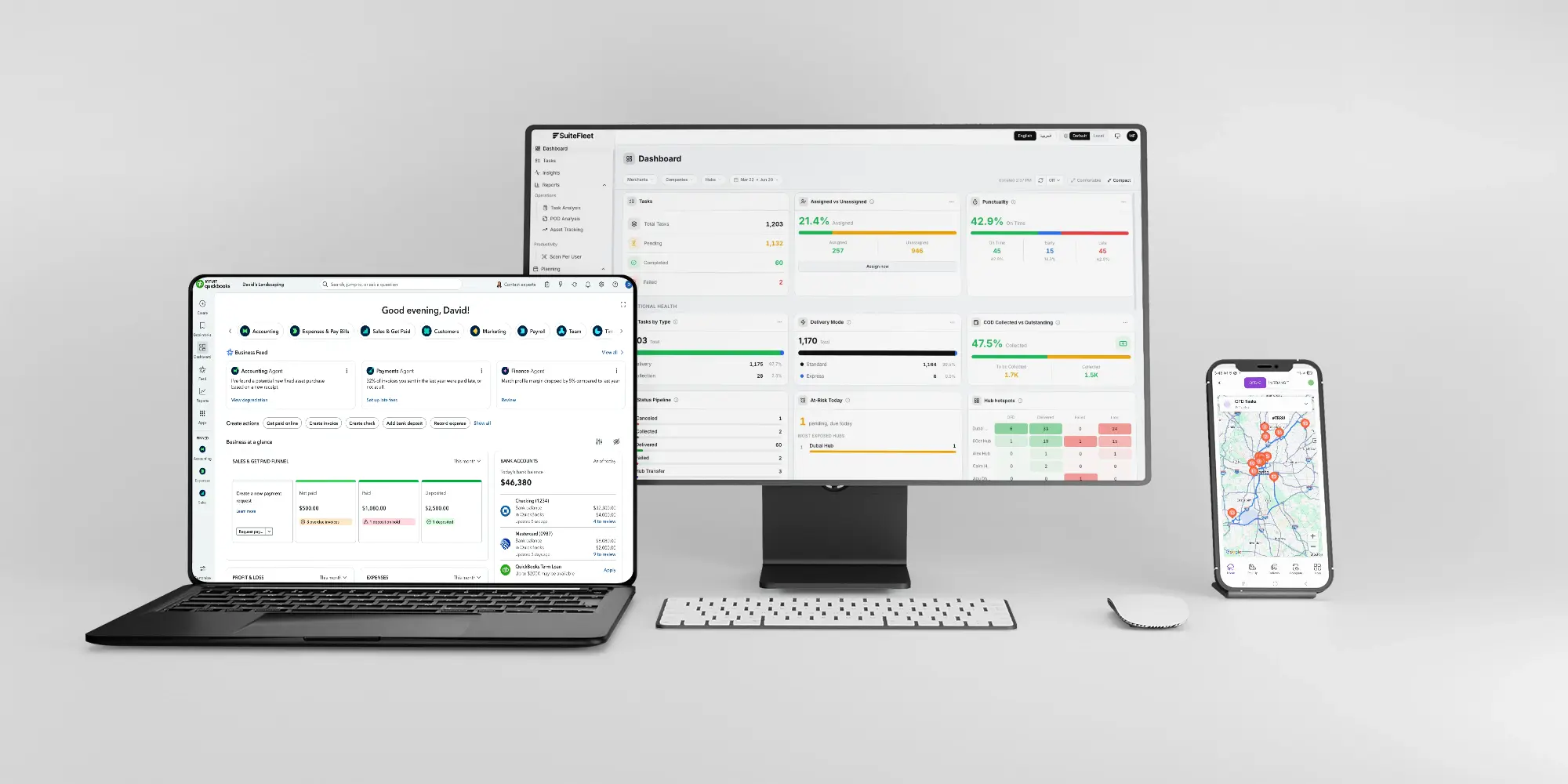
QuickBooks Transportation Management System — the operational backbone your books alone can't provide.
QuickBooks handles your invoices and expenses. SuiteFleet runs the transport operation, syncing every job cost back automatically.

.webp)


What QuickBooks Manages, and What It Cannot:
QuickBooks Online handles invoicing, expense categorization, payroll, and bank reconciliation effectively for thousands of small transport and courier businesses. The day-to-day operations, which driver takes which vehicle, what route to follow, how to schedule pickups, when vehicles need servicing, happen entirely outside QuickBooks: no dispatch management, no route optimization, no job-level cost allocation, no compliance tracking.
What Changes When QuickBooks and SuiteFleet Are Connected:
- Dispatch management: driver assignments and vehicle allocation replace phone calls, texts, and whiteboards with a structured system.
- Route optimization: optimized paths replace habitual routes, cutting fuel and time on every run.
- Job costing: fuel, labor, tolls, and vehicle wear allocated to individual jobs, revealing which customers are actually profitable.
- Compliance tracking: driver licenses, vehicle registrations, and inspection schedules tracked automatically with expiry alerts.
- QuickBooks writeback: job costs and customer invoices sync automatically, eliminating double data entry between operations and accounting.
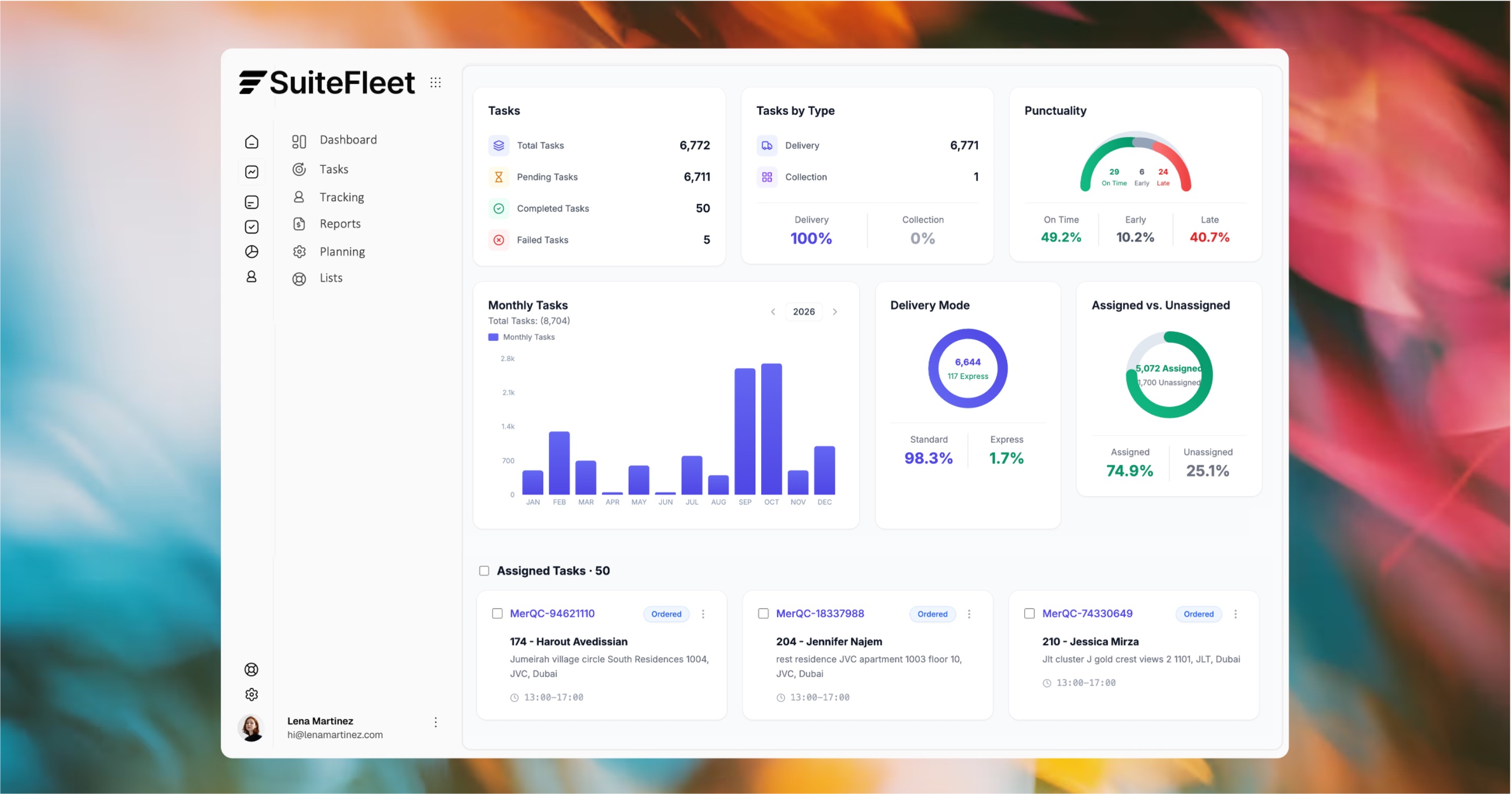

QuickBooks tracks the books. SuiteFleet runs the operation behind them.

Who This Is For:
Small transport companies, courier services, and local delivery businesses on QuickBooks Online currently running dispatch by phone and whiteboard, with job profitability unknown.
Technical Integration Details:
Connects via the Intuit QuickBooks API with one-click authorization. Expense categories map to your QuickBooks chart of accounts, with job costs and customer invoices syncing automatically as jobs complete.
How It Works (steps):
- Transport jobs are created, with drivers and vehicles assigned and routes optimized for dispatch.
- Every job is tracked live with GPS, and proof of delivery is captured with photos and signatures.
- Job costs categorize and post to QuickBooks expenses, and customer invoices post to QuickBooks AR automatically.




.svg)

.svg)
.svg)
.svg)