.svg)
Salesforce Transportation Management System — bridges the CRM-to-transport execution gap.
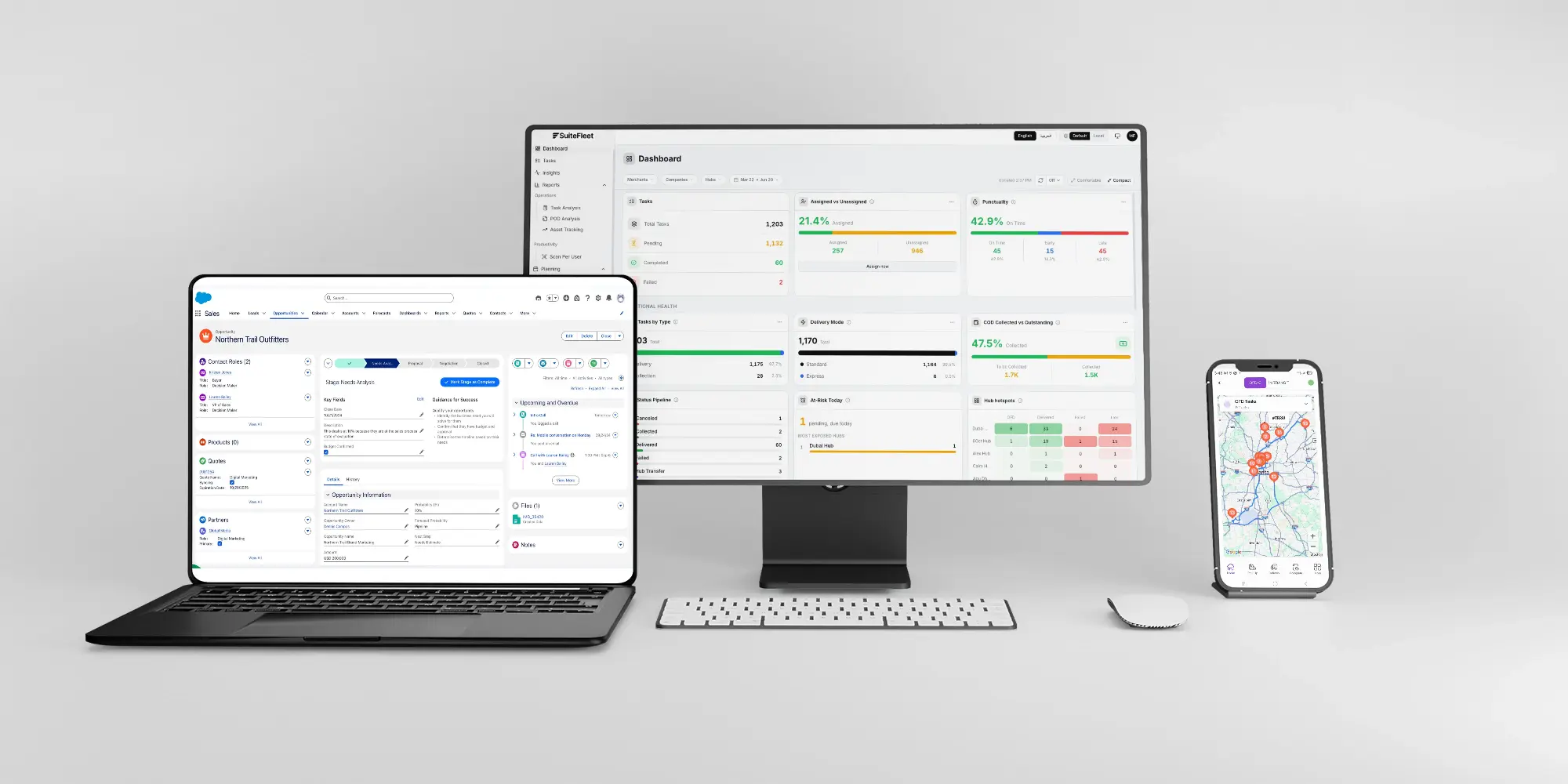
Salesforce manages the customer relationship. SuiteFleet manages the transport operation behind every order, synced back automatically.

.webp)


What Salesforce Manages, and What It Cannot:
Salesforce manages customer pipelines, quotes, and service agreements with real depth as the CRM of choice for logistics companies, freight brokers, and 3PLs. When a deal closes and goods need to move, Salesforce offers zero transport management capability: no load building, no carrier selection, no freight management, and no shipment tracking of any kind.
What Changes When Salesforce and SuiteFleet Are Connected:
- Load optimization: customer orders consolidated into efficient loads instead of shipping individually.
- Carrier management: automated selection by cost, transit time, and service level replaces manual carrier coordination.
- Customer visibility: reps see live shipment status and ETAs directly in Salesforce records, closing the customer service blind spot.
- Cost-to-serve visibility: transport cost and profitability tracked per customer account, replacing guesswork with real margin data.
- Salesforce writeback: delivery status, POD, freight costs, and performance metrics sync back automatically, eliminating manual order re-keying.
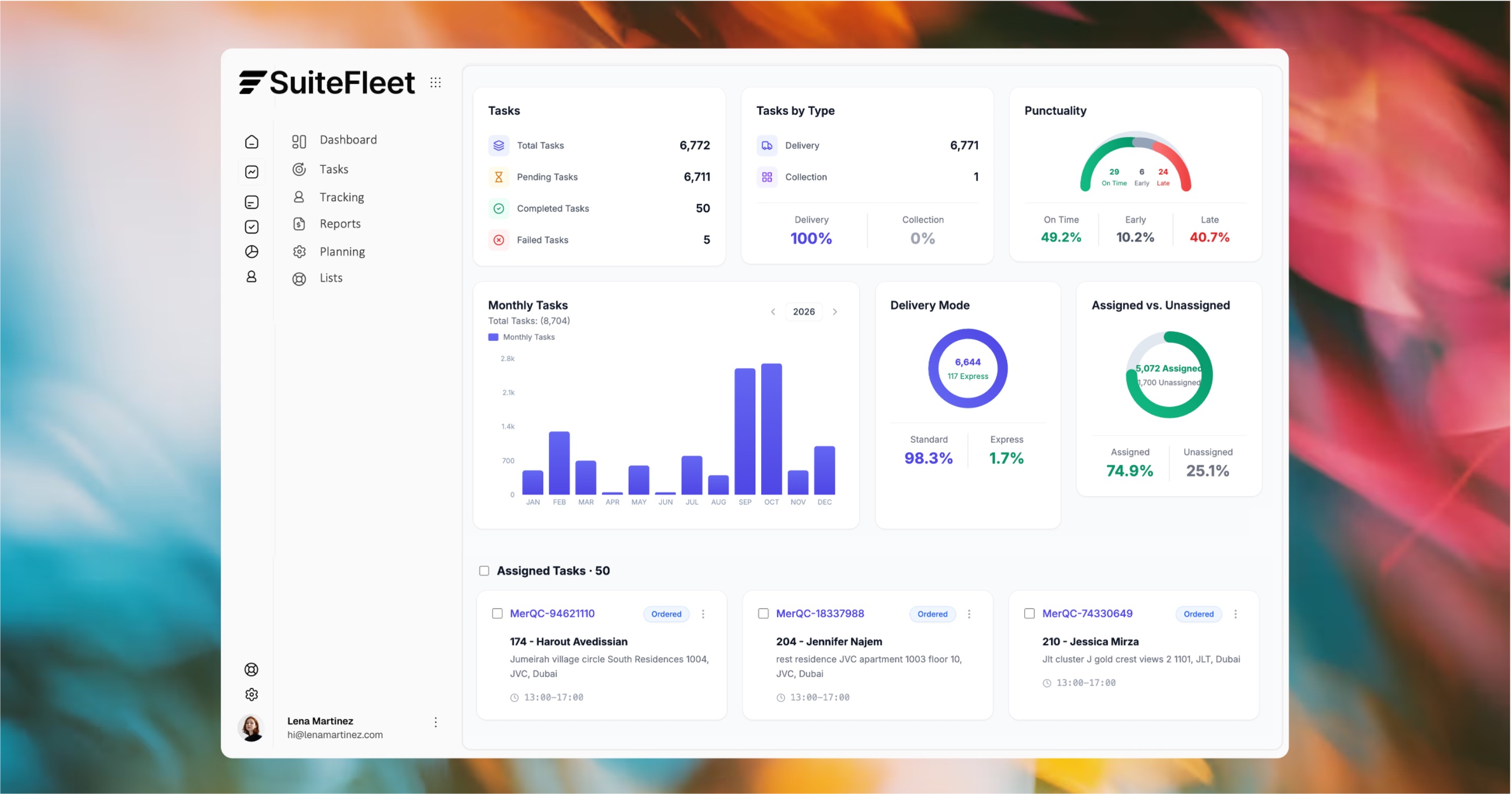

Salesforce manages the relationship. SuiteFleet manages the shipment.

Who This Is For:
Logistics companies, freight brokers, and 3PLs using Salesforce as their CRM who need dedicated transport execution: load planning, carrier management, and shipment tracking that Salesforce cannot provide.
Technical Integration Details:
Connects via the Salesforce REST API and Platform Events. Customer orders, account data, and service level agreements flow in automatically at fulfillment stage, with shipment status, costs, and performance metrics syncing back to Salesforce records.
How It Works (steps):
- Customer orders and SLA data flow from Salesforce into SuiteFleet when orders reach fulfillment stage.
- SuiteFleet builds loads, selects carriers by rate and SLA, and optimizes routes across the fleet.
- Delivery status, POD, and cost data sync back to Salesforce records automatically.






.svg)
.svg)
.svg)