.svg)
SAP Business One Transportation Management System — full transport operations for SAP B1 distributors.
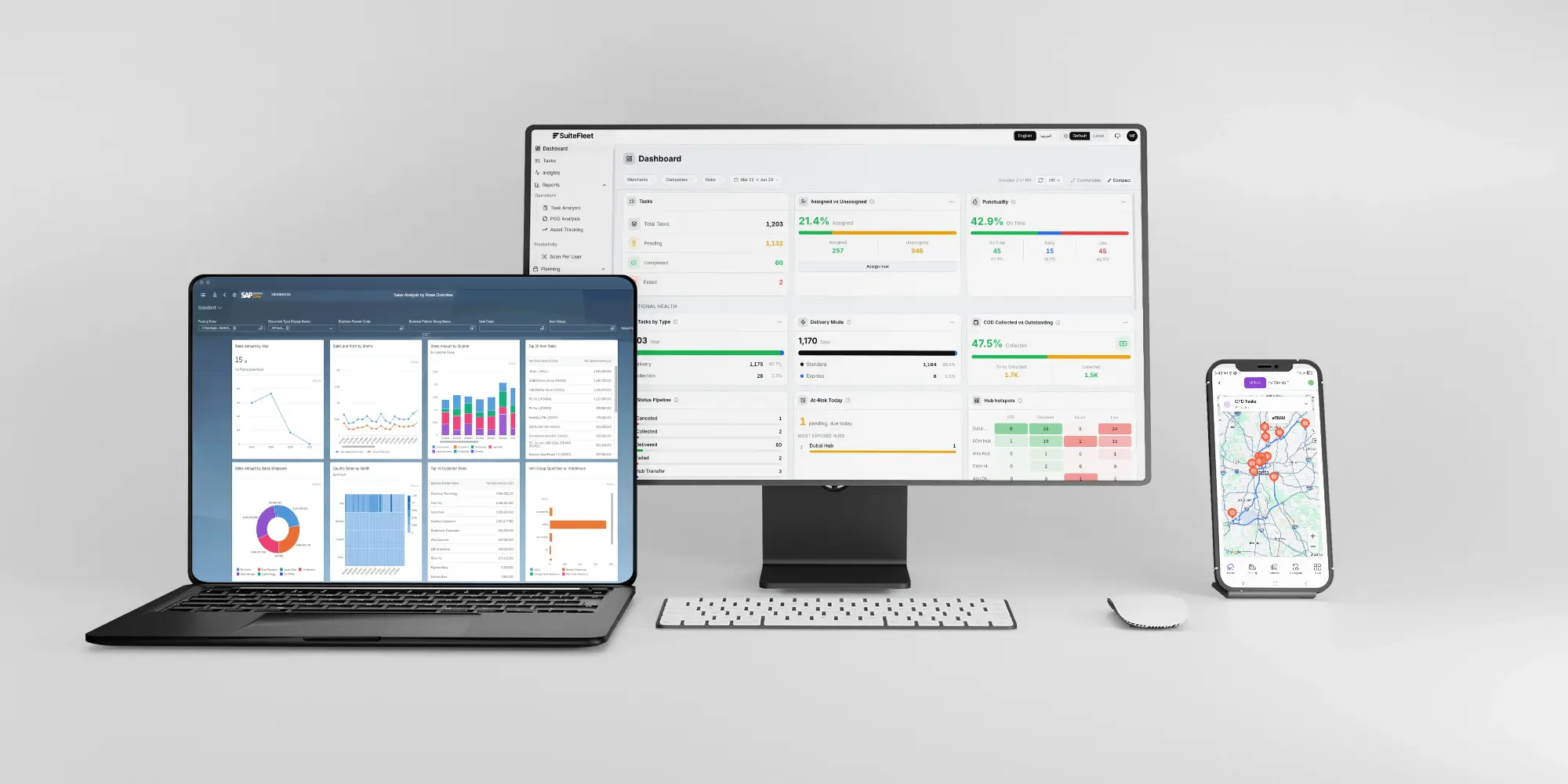
SAP Business One manages financials, inventory, and delivery notes. SuiteFleet manages the transport operation behind them, synced back automatically.

.webp)


What SAP Business One Manages, and What It Cannot:
SAP Business One handles financials, inventory, sales, and delivery note generation for small and mid-sized businesses with real depth. It has no dedicated transport management capability at all: no load building, no carrier rate comparison, no route optimization, and no freight cost allocation by shipment.
What Changes When SAP B1 and SuiteFleet Are Connected:
- Load optimization: delivery notes consolidate into efficient loads by weight, volume, and destination instead of shipping individually.
- Carrier management: rate and performance-based carrier selection replaces manual phone or email coordination for subcontracted work.
- Real-time visibility: GPS and milestone tracking sync status back to SAP B1 delivery note records automatically.
- Cost visibility: freight spend by carrier and route replaces lump-sum expense entries with real per-shipment data.
- SAP B1 writeback: freight costs, delivery confirmations, and carrier invoices post back for financial reconciliation.
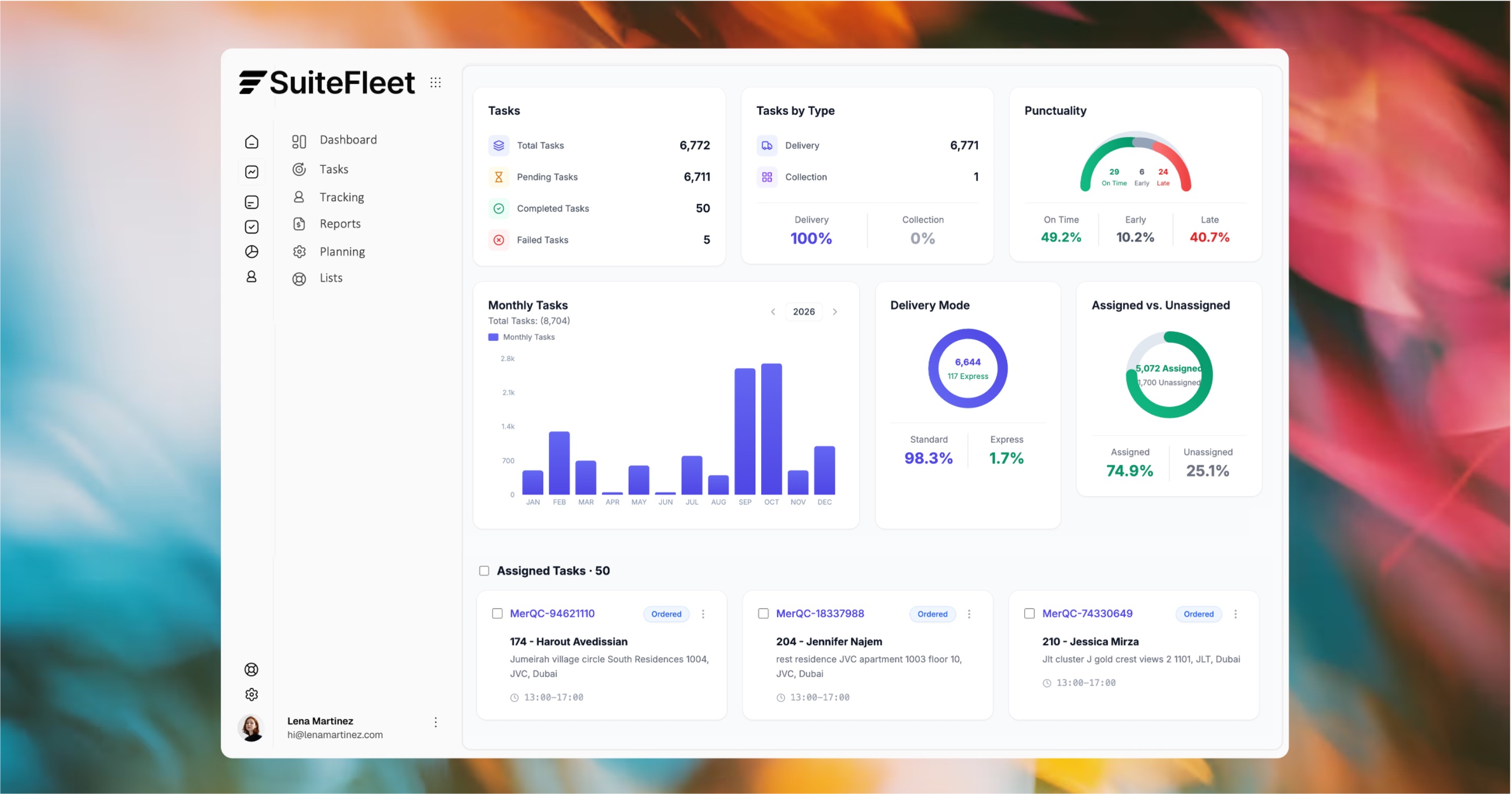

SAP B1 manages the delivery note. SuiteFleet runs the transport operation.

Who This Is For:
Small and mid-sized distributors on SAP Business One running their own delivery fleet or managing subcontracted carriers, needing transport planning and cost visibility SAP B1 alone doesn't provide.
Technical Integration Details:
Connects via the SAP Business One Service Layer / DI API. Delivery notes, ship-to addresses, and item weights sync in automatically, with freight costs and delivery confirmations posting back to SAP B1 for financial reconciliation.
How It Works (steps):
- Delivery notes are pulled from SAP Business One via the Service Layer API.
- SuiteFleet consolidates orders into optimized loads, selects carriers, and dispatches to fleet or subcontractor.
- Freight costs, delivery confirmations, and carrier invoices post back to SAP B1 automatically.





.svg)


.svg)
.svg)