
Workday Transportation Management System — turns budget line items into managed operations.
Workday tracks transport as a cost center. SuiteFleet manages the operation behind it, feeding real cost and labor data back automatically.


.webp)


What Workday Manages, and What It Cannot:
Workday Financial Management tracks transport as a cost center, and Workday HCM manages driver records, payroll, and time off with real depth. Neither module can actually manage transport operations: planning loads, selecting carriers, optimizing routes, or tracking shipments. The result is a financial system fed by manual estimates rather than real operational performance.
What Changes When Workday and SuiteFleet Are Connected:
- Load optimization: shipments consolidated into efficient loads, directly reducing the transport spend line in Workday budgets.
- Carrier management: rate, transit time, and performance-based carrier selection replaces cost line items with actual spend detail.
- Cost visibility: per-shipment, per-carrier, and per-route cost data replaces historical-average budget estimates with real actuals.
- Labor sync: driver hours, overtime, and utilization data flow into Workday HCM for accurate workforce planning.
- Workday writeback: cost actuals sync to Financial Management daily, and driver hours flow to HCM, keeping Workday Adaptive Planning current.
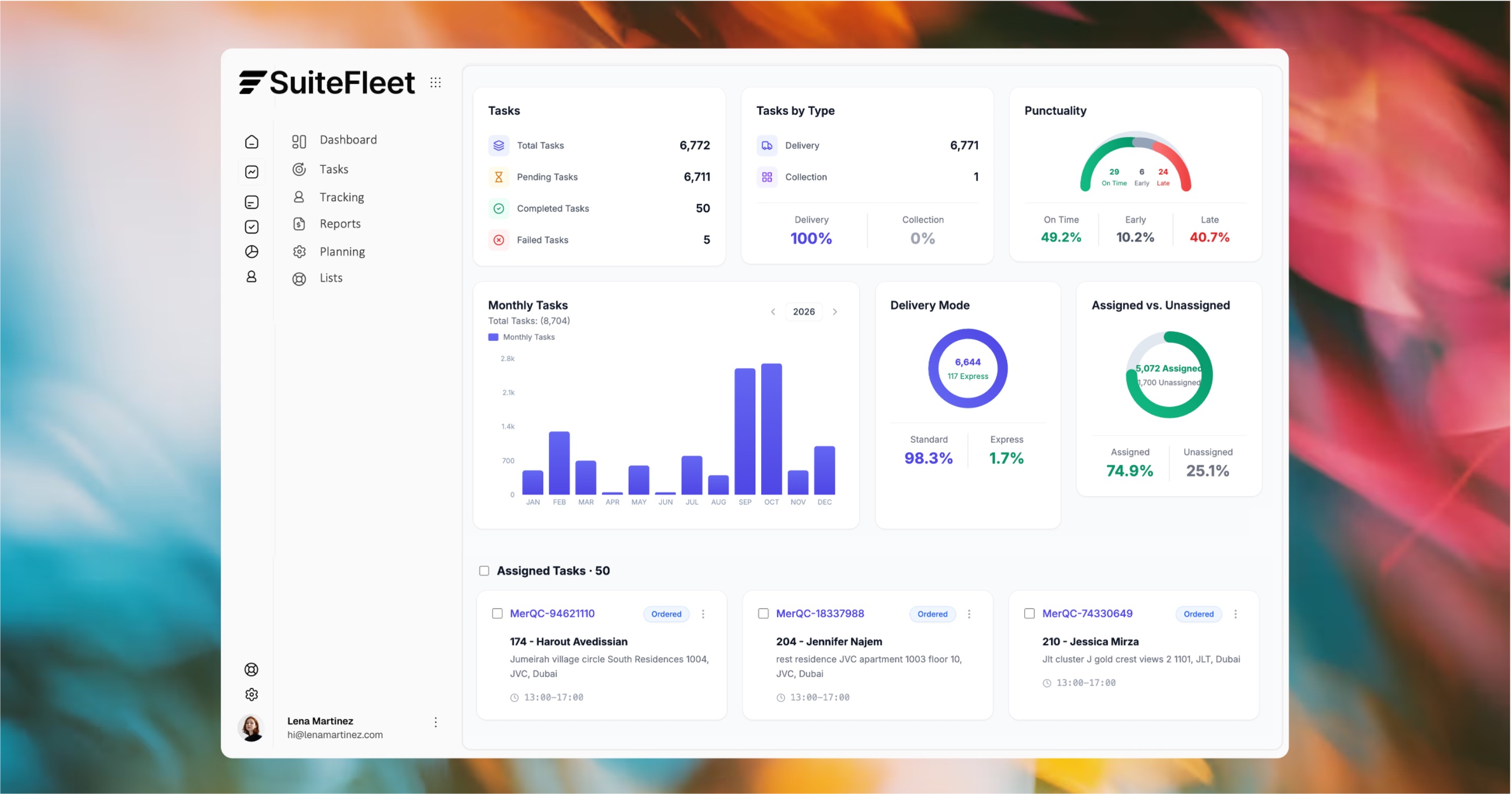

Workday tracks the budget line. SuiteFleet controls what's in it.

Who This Is For:
Organizations tracking transport as a Workday cost center that need actual operational control over loads, carriers, and routes, not just budget reporting after the fact.
Technical Integration Details:
Connects via the Workday REST API and Workday Integration Cloud. Transport cost categories map to Workday cost centers and ledger accounts, with driver data connecting to Workday HCM for workforce planning sync.
How It Works (steps):
- Transport cost categories and driver data are mapped to Workday cost centers and HCM records.
- SuiteFleet plans loads, selects carriers, optimizes routes, and schedules drivers, generating real cost data per shipment.
- Transport cost actuals sync to Workday Financial Management daily, and driver hours flow to HCM.




.svg)


.svg)
.svg)
.svg)