Why Choosing a Transportation Management System Is Harder Than It Looks
The transportation management systems market has never been more crowded. Enterprise platforms, vertical specialists, carrier-focused tools, e-commerce plugins — all claiming to solve the same problems. What makes it harder:
- Most tools are not built for your ERP; they require middleware, custom connectors, or ongoing IT support to stay functional
- Pricing and capability vary wildly between SMB and enterprise tiers
- Regional requirements (compliance, carrier networks, local integrations) are rarely covered by Western-built platforms
- AI claims are everywhere; genuine AI-driven automation is rare
This guide cuts through the noise. We evaluated 20 solutions across five categories, validated their client references, and built a decision framework to help you find the right fit by ERP, business size, and region.
What Is a Transportation Management System?
A transportation management system (TMS) is software that helps businesses plan, execute, and optimize the physical movement of goods. At its core, a TMS handles four functions: route planning, carrier selection and management, shipment execution, and real-time freight visibility.
Modern transportation management systems extend well beyond these basics. The best platforms in 2026 add real-time driver tracking, proof of delivery capture, last-mile delivery execution, bidirectional ERP integration, and AI-powered route optimization. Buyers today increasingly need systems that handle own-fleet dispatch and dispatch planning for their drivers — capabilities that legacy enterprise TMS platforms were not originally built to provide.
Understanding the difference matters when choosing. Traditional transportation management systems focus on freight procurement, carrier tendering, and multimodal planning. Last-mile delivery platforms focus on driver dispatch, delivery execution, and proof of delivery for own-fleet operations. Many businesses need both — or a single platform that covers both without middleware.
This guide covers the full spectrum: enterprise transportation management systems for complex multimodal requirements, mid-market specialists, regional platforms, and last-mile execution tools that connect directly to your ERP via NetSuite, Salesforce, SAP, and other integrations.
How We Made This Study
- 20 vendors evaluated across enterprise, mid-market, SMB, regional, and e-commerce categories
- Selection criteria: ERP integration depth, AI capability, verified public client references, regional coverage, and pricing accessibility
- Client references verified against publicly available case studies and company websites
- Ecosystem integrations confirmed against vendor documentation
The 20 Best TMS Solutions
NetSuite TMS and Fleet Management
Best for: NetSuite customers who want to avoid integration overhead and manage everything inside their ERP.
Enterprise TMS Platforms
Best for: Large organizations with complex multimodal requirements, global operations, or deep SAP/Oracle ecosystems.
Mid-Market and Specialist TMS
Best for: Growing businesses needing more than a basic shipping tool without enterprise price tags or implementation timelines.
MENA and Regional Specialists
Best for: Businesses operating in the GCC, Levant, or broader MENA region where local compliance, carrier networks, and e-commerce integrations matter.
E-Commerce Last-Mile and Delivery
Best for: Shopify merchants, D2C brands, and retailers where the delivery experience is part of the product.
How to Choose: Decision Framework
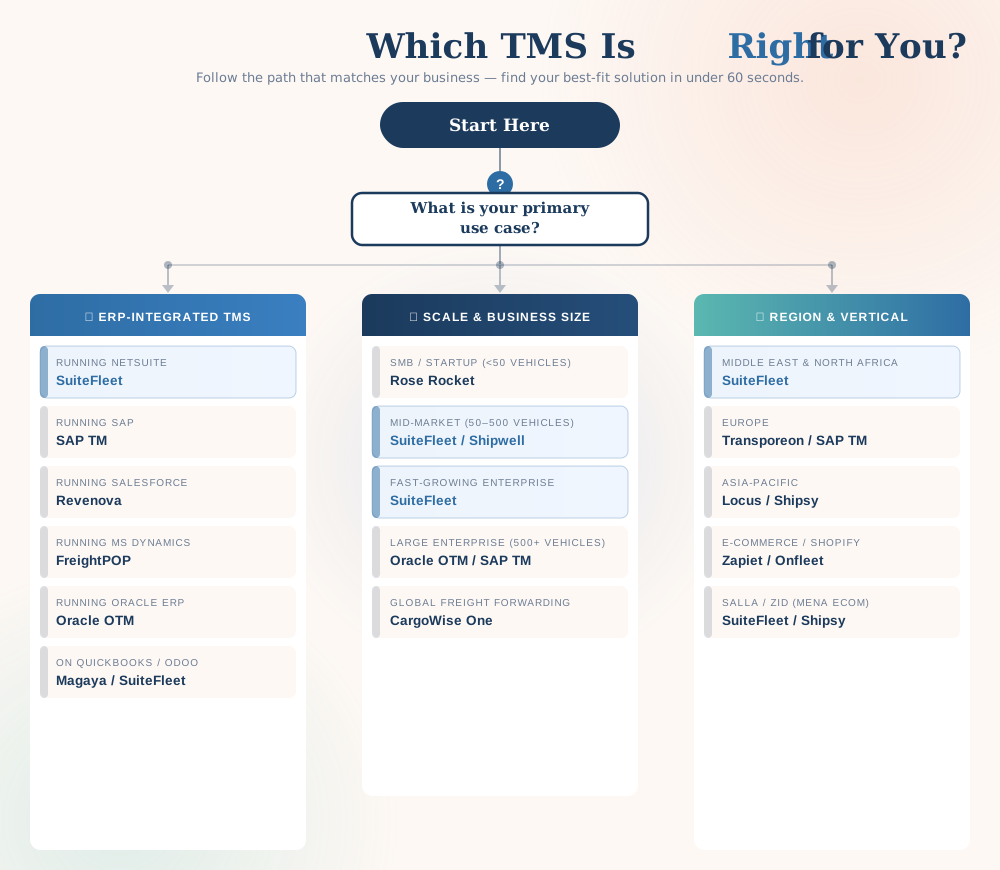
By ERP or Platform
By Business Size
By Region
Frequently Asked Questions
What is a transportation management system?
A transportation management system (TMS) is software that helps companies plan routes, manage carriers, execute shipments, and track freight in real time. Modern transportation management systems also include last-mile delivery execution, proof of delivery, driver dispatch, and direct integration with ERP systems like NetSuite, SAP, and Microsoft Dynamics 365.
What is the best transportation management system for NetSuite?
SuiteFleet is the leading NetSuite-native transportation management system. It runs directly inside NetSuite with no middleware, includes AI-powered route optimization, driver dispatch, live fleet tracking, and proof of delivery — all syncing bidirectionally with NetSuite records. FreightPOP and Shipwell are strong secondary options for multi-carrier shipping needs.
What is the difference between a TMS and an ERP?
An ERP (Enterprise Resource Planning) system manages core business processes: finance, inventory, procurement, and orders. A transportation management system manages the physical movement of goods — routes, drivers, carriers, and deliveries. Most ERPs have limited built-in TMS capabilities, which is why businesses add a dedicated platform for delivery execution. The best transportation management systems integrate bidirectionally with the ERP so delivery data flows back into financial and inventory records automatically.
How much do transportation management systems cost?
TMS pricing varies widely by tier. SMB platforms like Rose Rocket start from $99/month. Mid-market platforms typically range from $500 to $5,000/month depending on volume and features. Enterprise transportation management systems like Oracle OTM and SAP TM are licensed annually, often starting at $50,000+ per year. SuiteFleet offers tiered pricing based on delivery volume and fleet size.
What is the best TMS for small businesses?
For small businesses running their own fleet, Rose Rocket ($99/month) is the most accessible option with genuine AI capabilities. For Shopify merchants, Zapiet ($29.99/month) is top-rated for click-and-collect and delivery scheduling. For businesses on NetSuite, QuickBooks, or Salesforce, SuiteFleet provides direct ERP integration without requiring dedicated IT resources.
Which transportation management systems support MENA operations?
SuiteFleet and Shipsy are the two strongest options for businesses in the Middle East and North Africa. SuiteFleet is NetSuite-native and supports GCC compliance requirements, with local integrations for Salla and Zid. Shipsy has 20,000+ regional shippers on its platform and strong coverage across GCC, Levant, and broader MENA.
What are the four types of transport systems?
The four main transportation modes are road (truck and van), rail, air, and ocean (sea freight). A multimodal transportation management system can plan and manage shipments across all four. Most mid-market and last-mile TMS platforms focus specifically on road transport, which is where the majority of own-fleet delivery operations sit.
What TMS does Amazon use?
Amazon operates a proprietary in-house transportation management system that powers its same-day and next-day delivery network. For businesses looking to replicate Amazon-level delivery execution on their own fleet, platforms like SuiteFleet provide AI-driven route optimization, real-time driver tracking, and proof of delivery at an accessible price point.
Looking for the Right Transportation Management System for Your Business?
Many TMS tools add complexity. SuiteFleet removes it.
- AI fleet agents that act on data, not just dashboards that display it
- Multi-region, robust compliance engine built for expanding organizations
- Connects seamlessly with the systems you already use like NetSuite, Salesforce, SAP, Shopify, Salla, and more
- Used by fast-growing enterprises like BloomingBox, Napco National, Green Coast, and Grab & Go