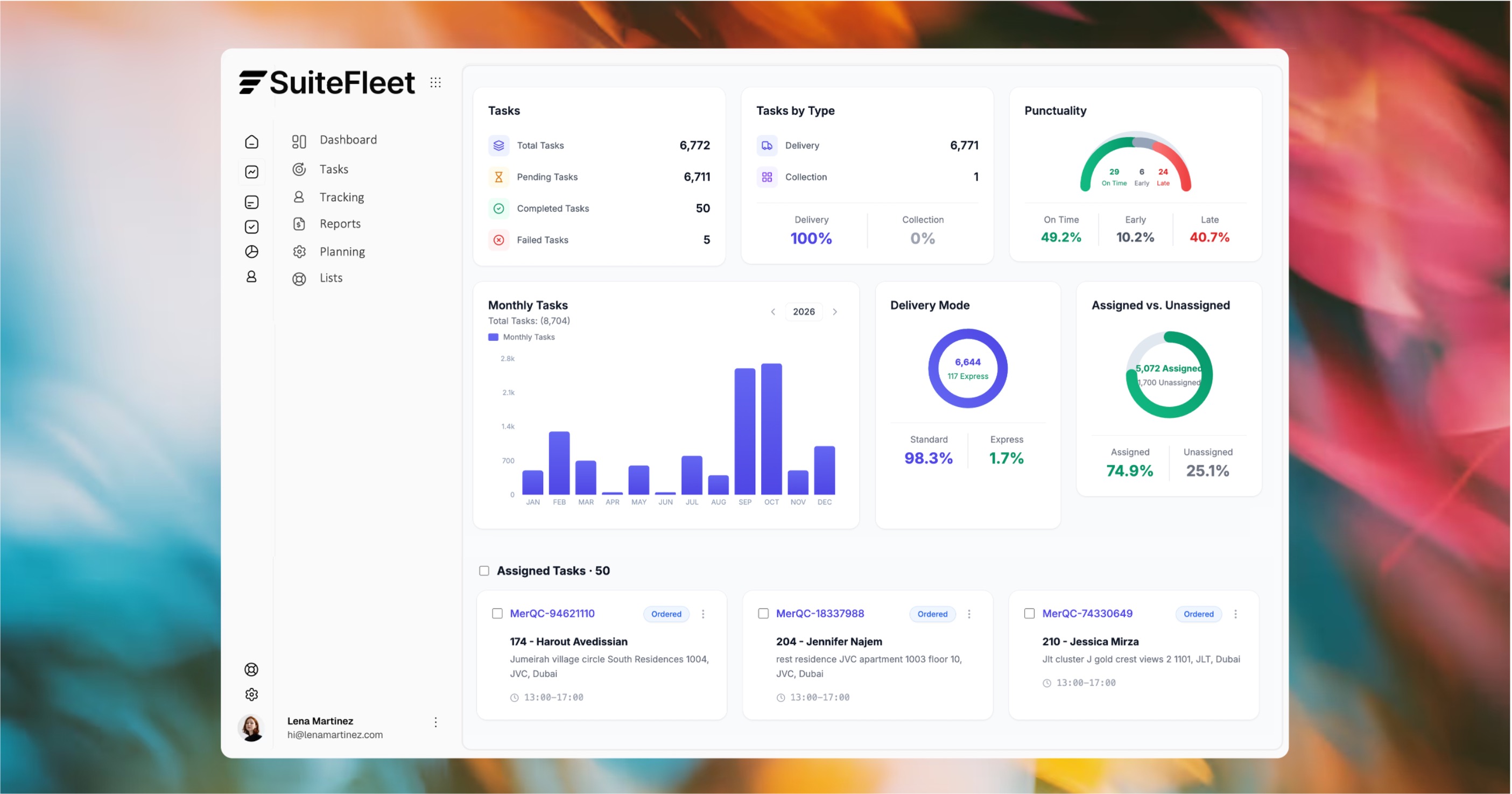




The SAP S/4HANA–SuiteFleet integration links outbound deliveries to delivery tasks. Dispatchers review destinations, assign drivers, and follow delivery attempts in SuiteFleet. Each result returns through the configured connection to the matching source record, preserving delivery items and predecessor relationships and any outstanding quantities.
Connector availability: SuiteFleet plans to publish its SAP S/4HANA connector on SAP Store, subject to the marketplace review and release process.
1. Start with the SAP S/4HANA order
Open the source order 50001234 for Northstar Components and inspect its delivery destination, line quantities, and configured SuiteFleet relationship. The example contains two lines with quantities 4 and 6 in the units shown.
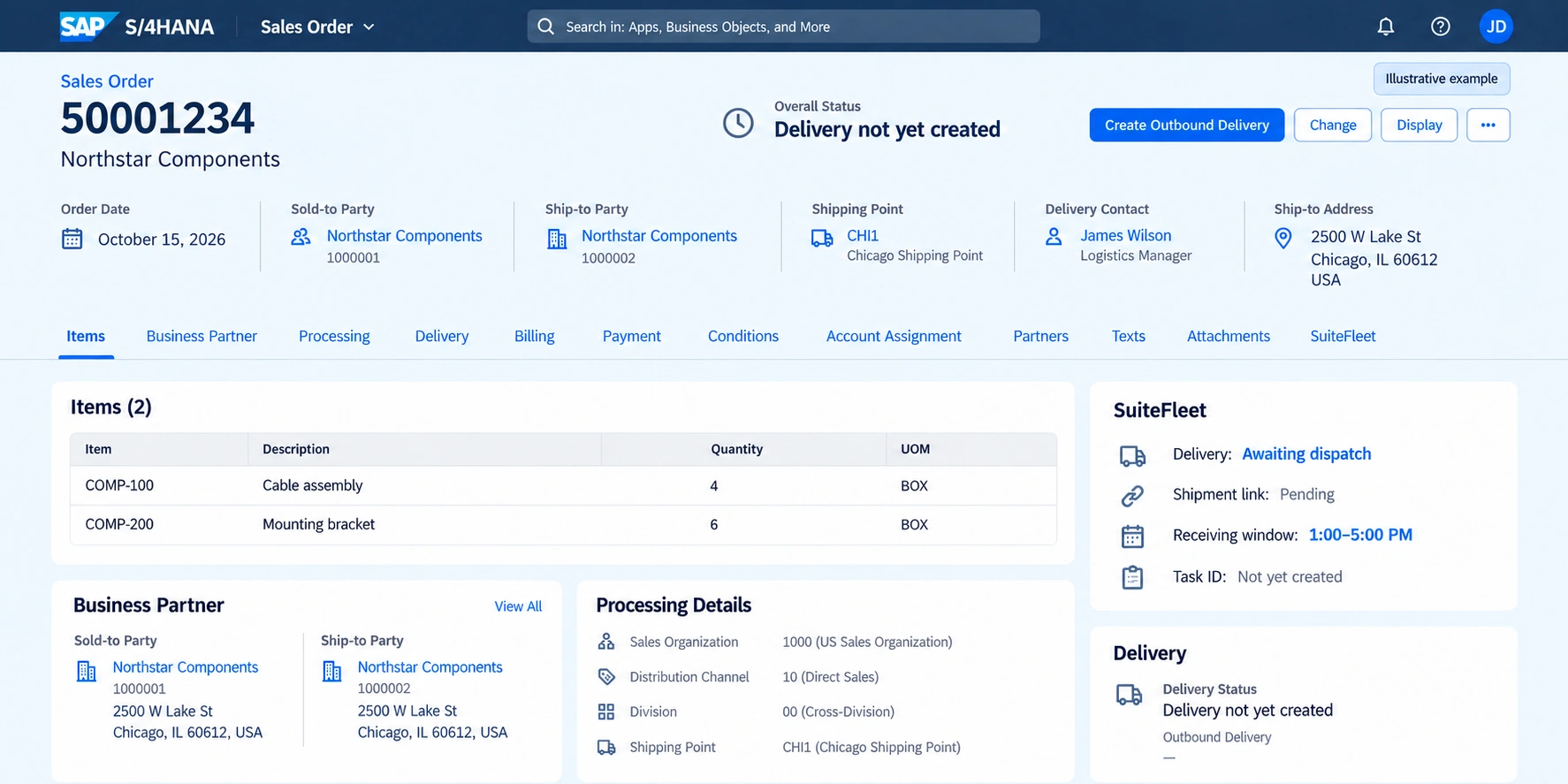
Review the sales order and delivery-relevant items, then identify the outbound delivery selected for execution. Resolve delivery or credit blocks, stock availability, picking, packing, and shipping-point requirements through the configured SAP process before dispatch.
The outbound delivery is the execution anchor, not simply the sales-order header. Shipping point, plant, ship-to party, delivery item, and sales unit matter when constructing tasks. Several source items or orders can feed the execution document; preserve all predecessor relationships. SAP delivery management APIs.
2. Configure the field mapping
Preserve this relationship before exporting delivery work:
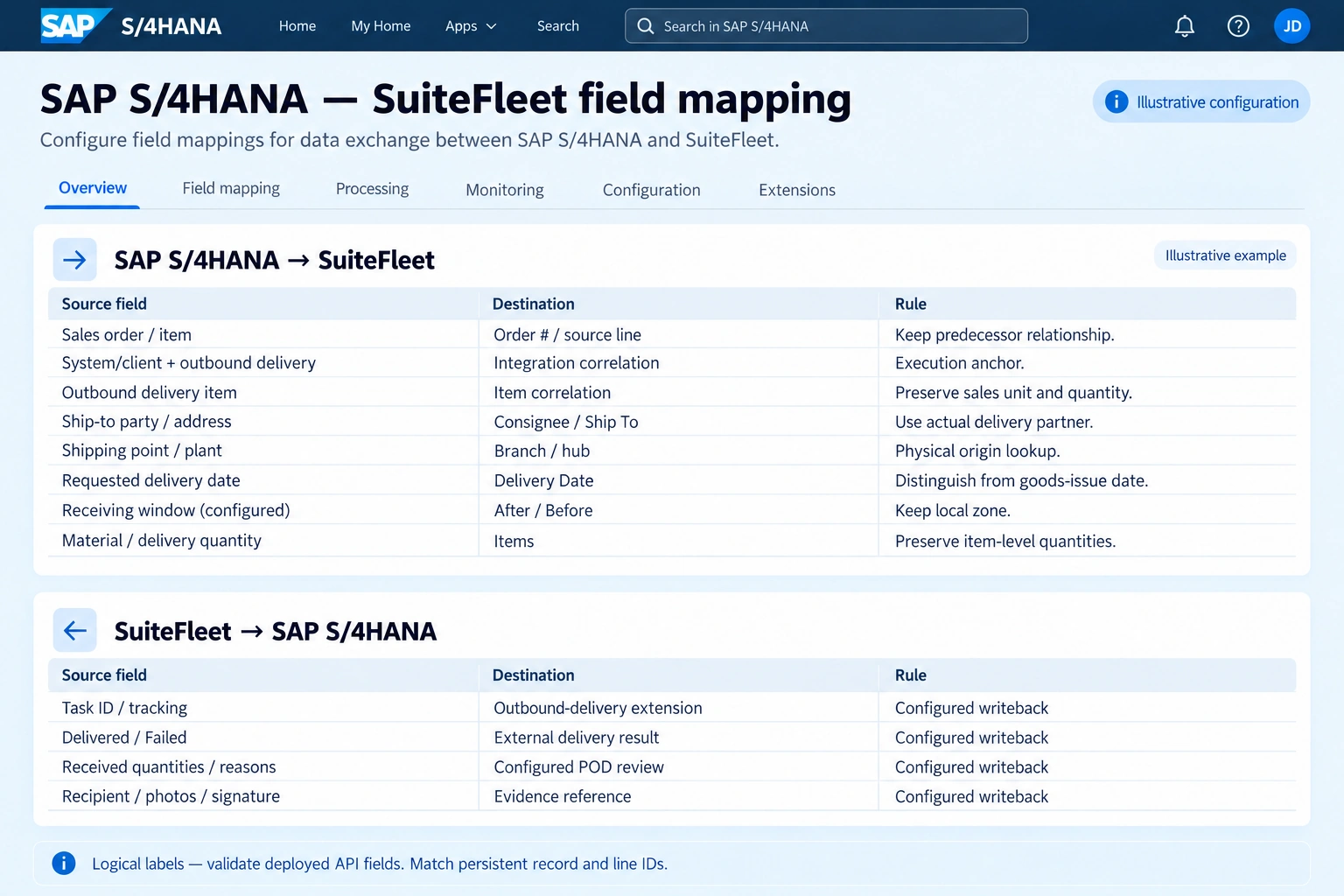
| SAP S/4HANA source | SuiteFleet destination | Rule |
|---|---|---|
| Sales order / item | Order # / source line | Keep predecessor relationship. |
| System/client + outbound delivery | Integration correlation | Execution anchor. |
| Outbound delivery item | Item correlation | Preserve sales unit and quantity. |
| Ship-to party / address | Consignee / Ship To | Use actual delivery partner. |
| Shipping point / plant | Branch / hub | Physical origin lookup. |
| Requested delivery date | Delivery Date | Distinguish from goods-issue date. |
| Receiving window (configured) | After / Before | Keep local zone. |
| Material / delivery quantity | Items | Preserve item-level quantities. |
| SuiteFleet result | SAP S/4HANA destination | Writeback rule |
|---|---|---|
| Task ID / tracking | Outbound-delivery extension | Confirm field access during configuration. |
| Delivered / Failed | External delivery result | Confirm field access during configuration. |
| Received quantities / reasons | Configured POD review | Confirm field access during configuration. |
| Recipient / photos / signature | Evidence reference | Confirm field access during configuration. |
SAP documents Outbound Delivery APIs and Proof of Delivery – Update. Behavior depends on release and deployment: validate communication arrangements, POD relevance, quantity differences, and whether confirmation needs a separate step. Never claim one universal endpoint automatically posts goods issue and confirms receipt. SAP POD update service.
3. Create and verify the SuiteFleet task
Send only the released shipment allocation through the configured interface. Store the returned task ID before reporting successful export. If the request times out, check for an existing task under the persistent shipment key before retrying creation.
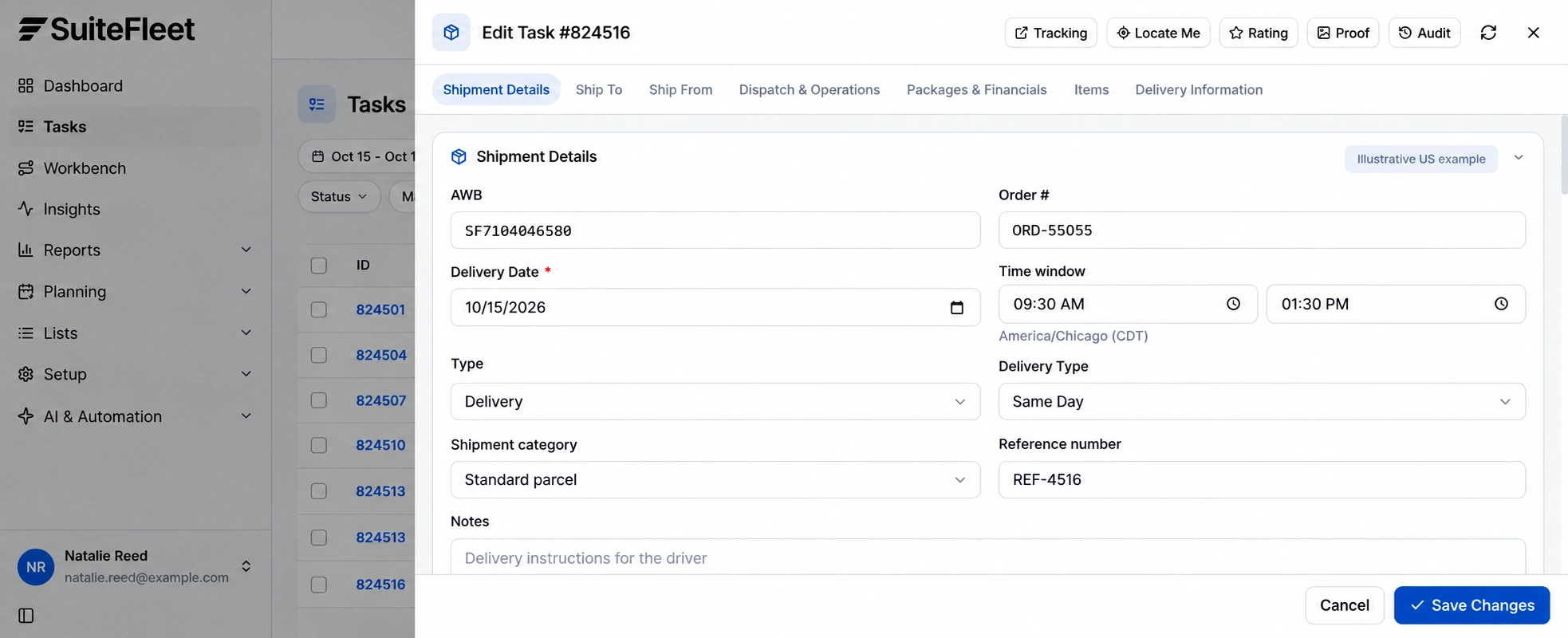
Compare Ship To, Items, delivery date, receiving window, and instructions with Outbound Delivery 80004567. Preserve item units independently from package count. A package quantity of one can contain several product units; neither value should silently replace the other.
Treat unmapped origins, missing contacts, and invalid addresses as actionable exceptions. Record the failing record key and field so the responsible user can correct the source and retry without re-entering the entire order.
4. Dispatch and manage exceptions
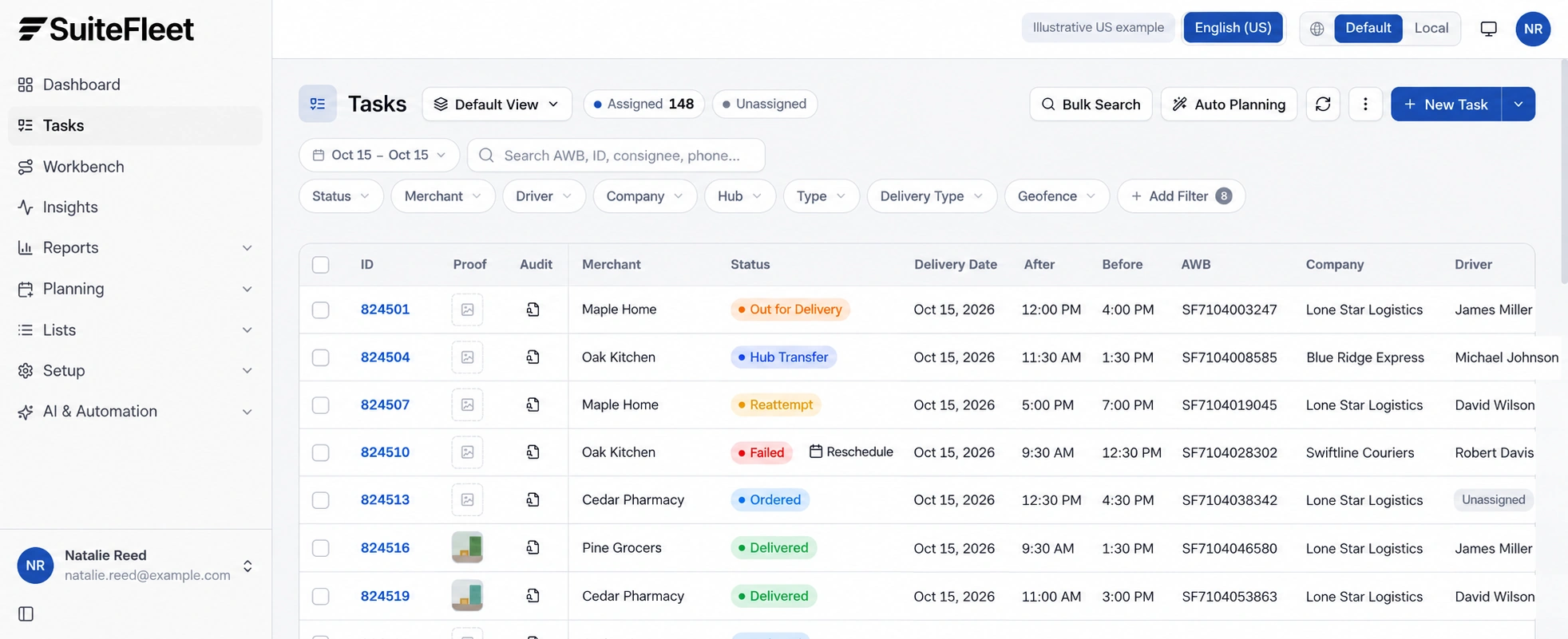
Use Tasks to filter operational work and open Dispatch & Operations to review Company, Driver, and Hub. Agree whether the connector or dispatcher owns each field; order updates should not silently overwrite an active driver assignment.
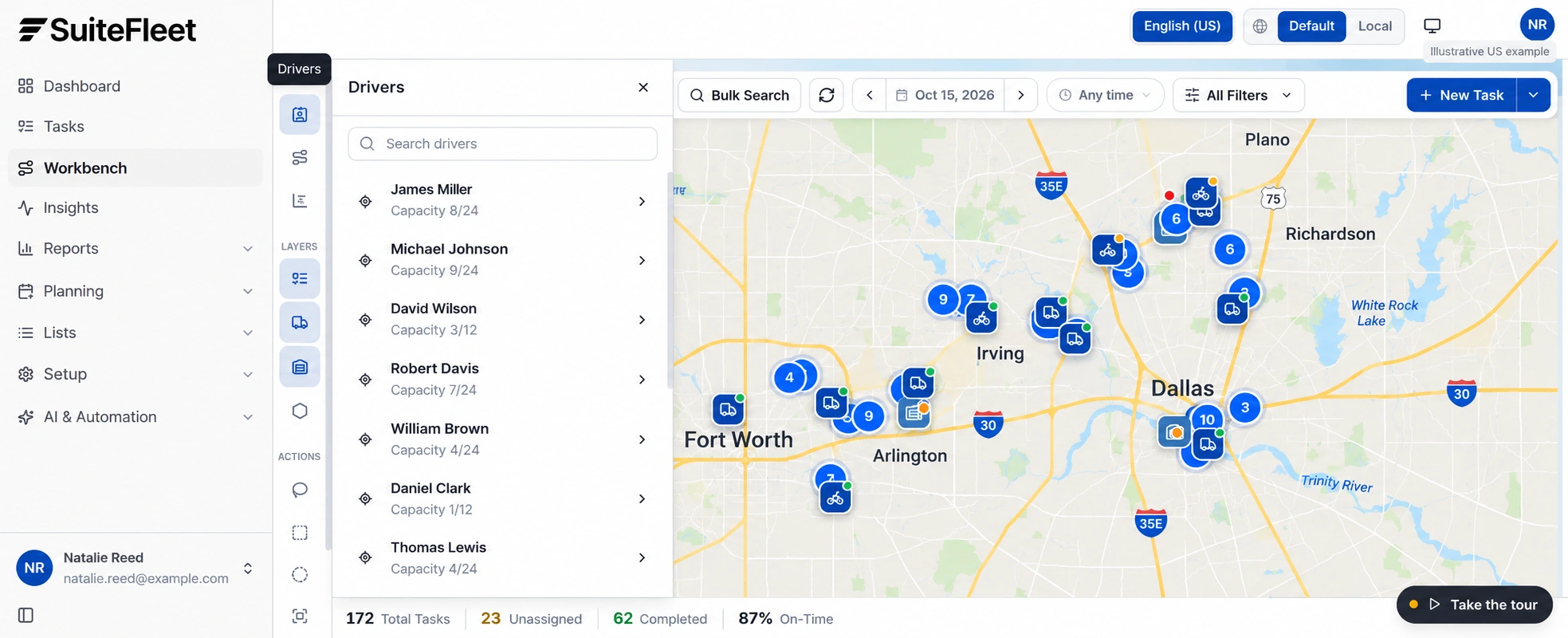
Workbench adds a geographic view of tasks and drivers. Inspect unresolved locations before dispatch and confirm that the driver can meet the receiving window. Keep route planning subordinate to actual release eligibility and warehouse readiness.
A shortage at handover is a receipt difference, not permission to repeat or reverse goods issue automatically. Follow the configured POD difference or exception process and keep the outbound-delivery item key.
For a failed or rescheduled stop, retain the attempt, reason, and original shipment relationship. Decide whether the next action is redelivery, return handling, address correction, or customer contact before creating more work.
5. Review delivery before writeback
On completion, match the result to the stored task and shipment identifiers. Review recipient and required proof, then reconcile accepted quantities at source-line level. Route missing or contradictory evidence for review instead of deriving acceptance from Delivered alone.
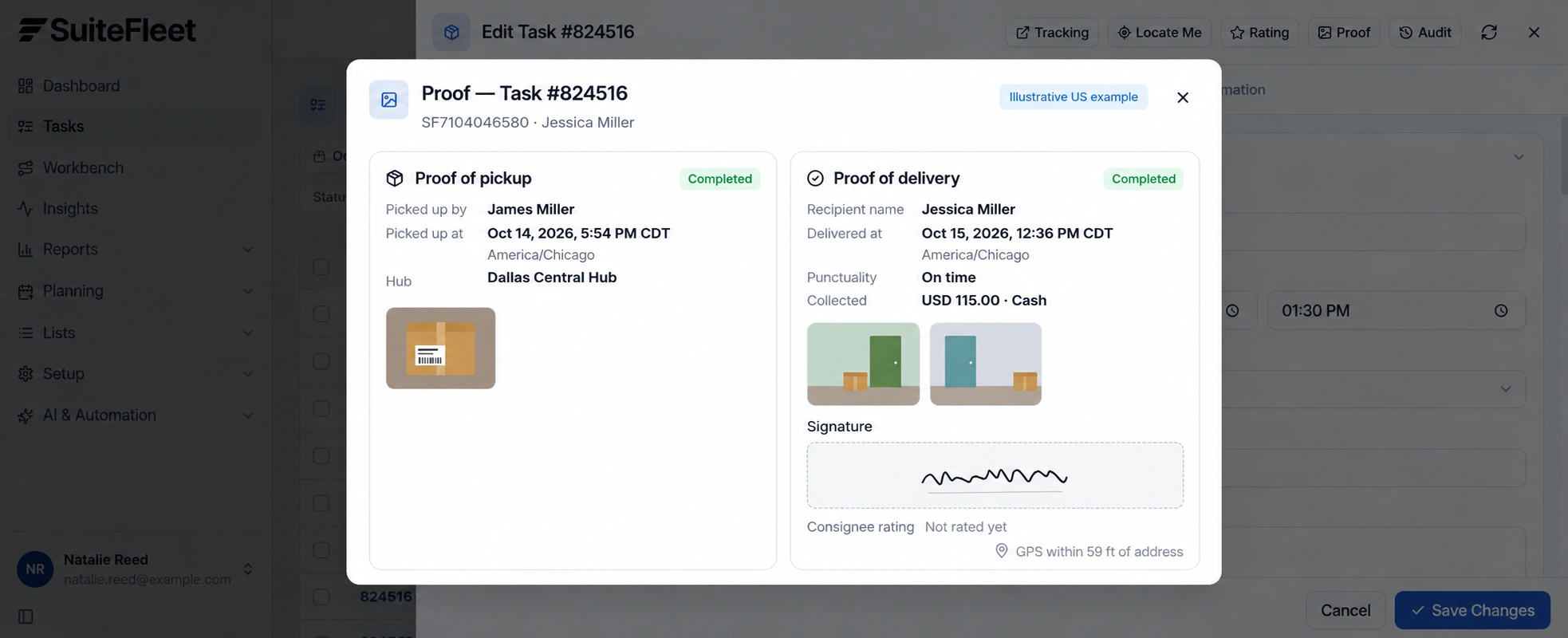
Deduplicate repeated completion messages and preserve event order. Store actual completion time separately from sync time; a later retry must not make an old delivery look newly completed. Keep delivery success and writeback success as distinct audit outcomes.
6. Verify the result in SAP S/4HANA
Keep post goods issue separate from customer receipt. Write evidence and delivery outcome to the outbound-delivery integration extension, or use the configured SAP proof-of-delivery process where supported. Do not equate an accepted API message with a confirmed POD state. SAP delivery management APIs.
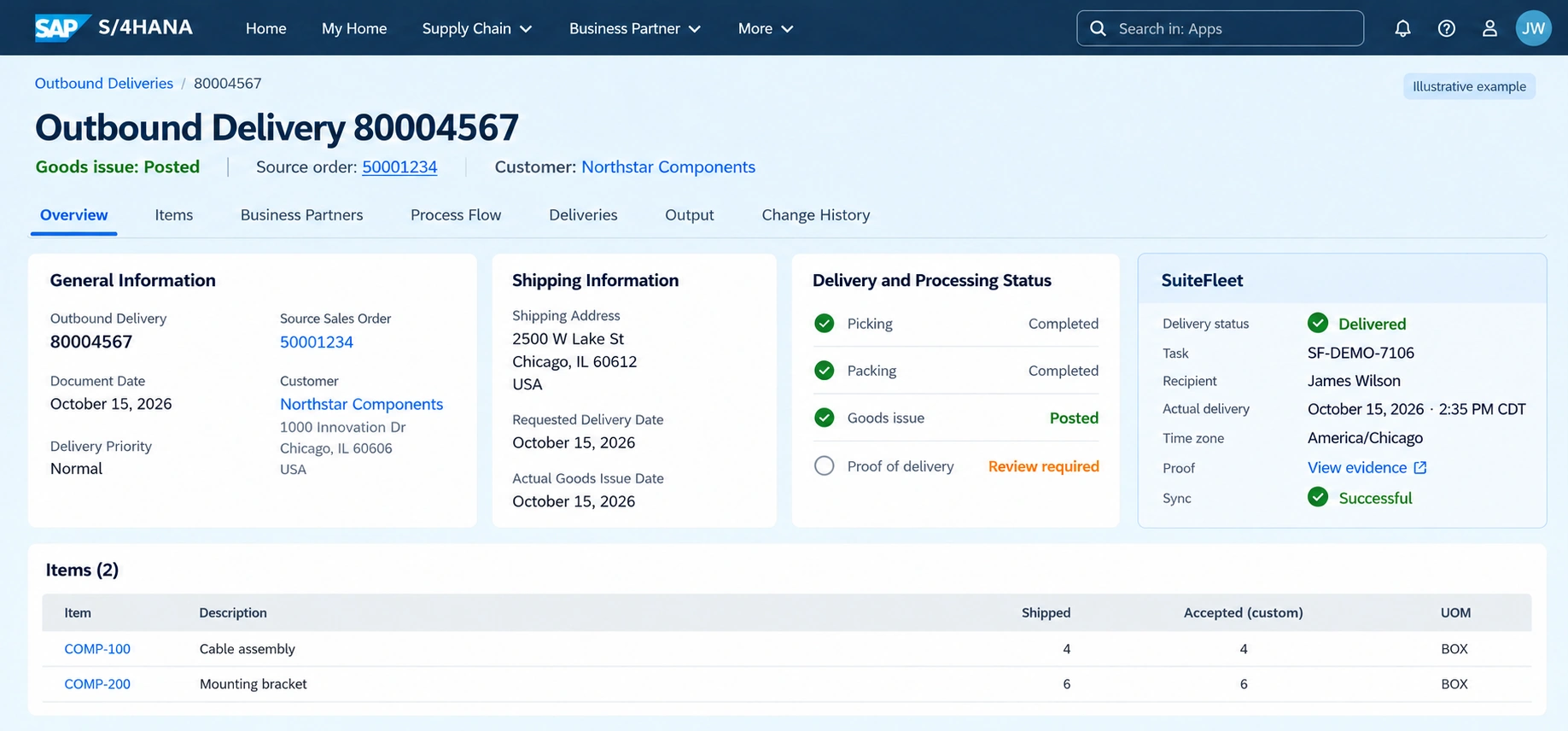
Outbound Delivery 80004567; task SF-DEMO-7106; recipient James Wilson; actual handover October 15, 2026 · 2:35 PM CDT (America/Chicago). First line: 4 shipped and 4 accepted. Second line: 6 shipped and 6 accepted.
Read back the linked record and review every outstanding allocation before marking the full order delivered. Test partial shipment, partial acceptance, failed delivery, duplicate completion, and delayed writeback. Keep inventory posting, receipt evidence, and payment reconciliation under their respective configured rules.
Frequently asked questions
Which SAP S/4HANA records should link to SuiteFleet?
The outbound delivery is the execution anchor, not simply the sales-order header. Shipping point, plant, ship-to party, delivery item, and sales unit matter when constructing tasks. Several source items or orders can feed the execution document; preserve all predecessor relationships.
How should delivery completion update SAP S/4HANA?
Keep post goods issue separate from customer receipt. Write evidence and delivery outcome to the outbound-delivery integration extension, or use the configured SAP proof-of-delivery process where supported. Do not equate an accepted API message with a confirmed POD state.