



Sage Last Mile Delivery — syncs delivery costs, invoices, and completion data back to your books automatically.
Sage tracks your money. SuiteFleet runs your last mile deliveries, feeding costs and invoices back into your Sage ledger.

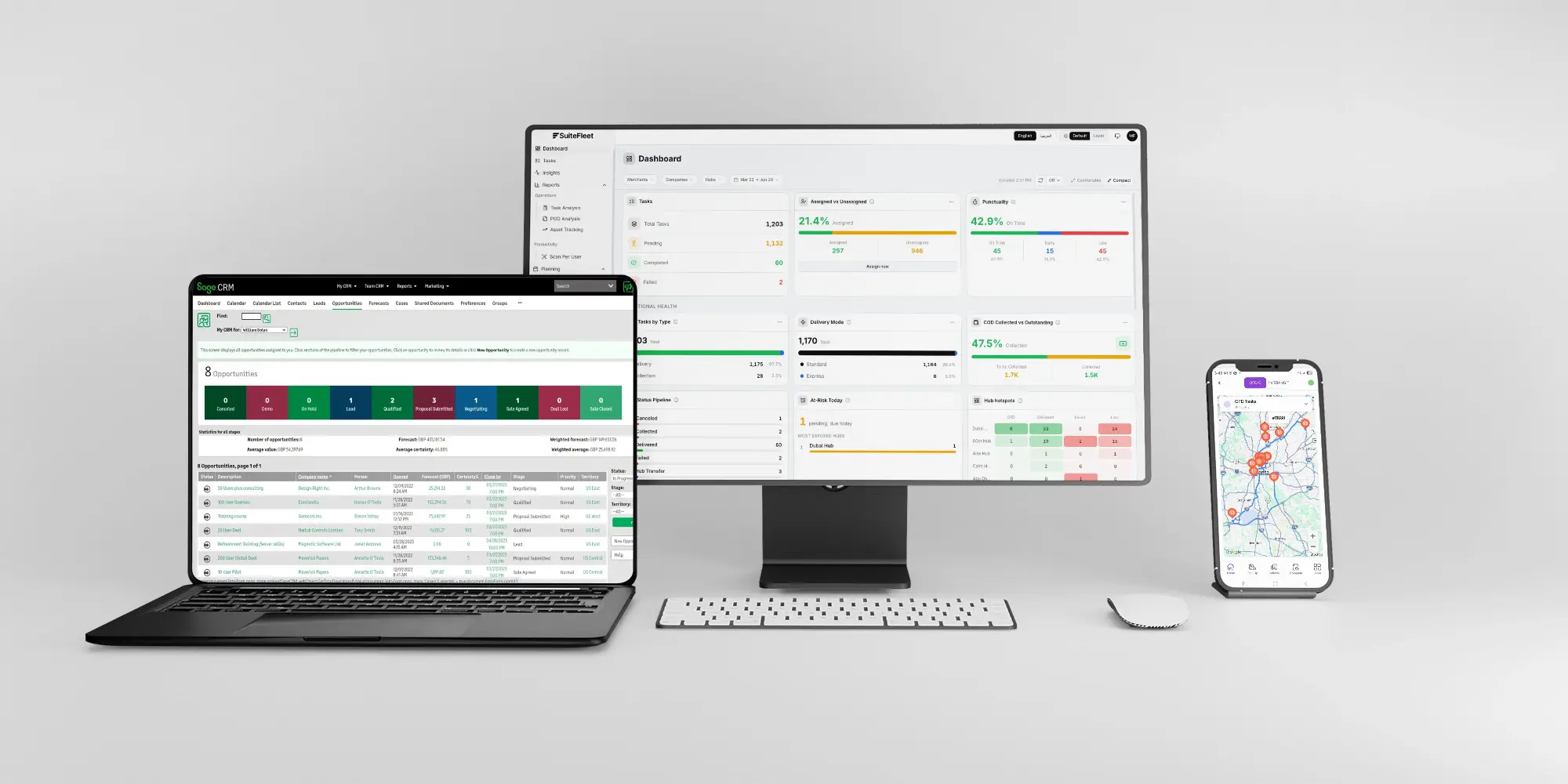
.webp)


What Sage Manages, and What It Cannot:
Sage is trusted by millions of small and mid-size businesses for accounting, invoicing, and payroll, with real depth in financial management. It has zero logistics functionality. Sage records total fuel and driver wages as lump-sum expenses, with no visibility into the cost of delivering to a specific customer, neighborhood, or delivery zone.
What Changes When Sage and SuiteFleet Are Connected:
- Billing sync: delivery fees and costs map to Sage accounts and invoice templates based on your pricing rules.
- Last mile route optimization: 2 to 3 hours of daily spreadsheet planning becomes seconds of automated sequencing.
- Customer notifications: automated tracking alerts eliminate the daily flood of "where is my delivery" calls.
- Time window compliance: specific delivery windows offered and kept, with customers notified in advance of any shift.
- Sage writeback: invoices auto-generate on delivery completion, and delivery costs log to the correct expense accounts without manual entry.
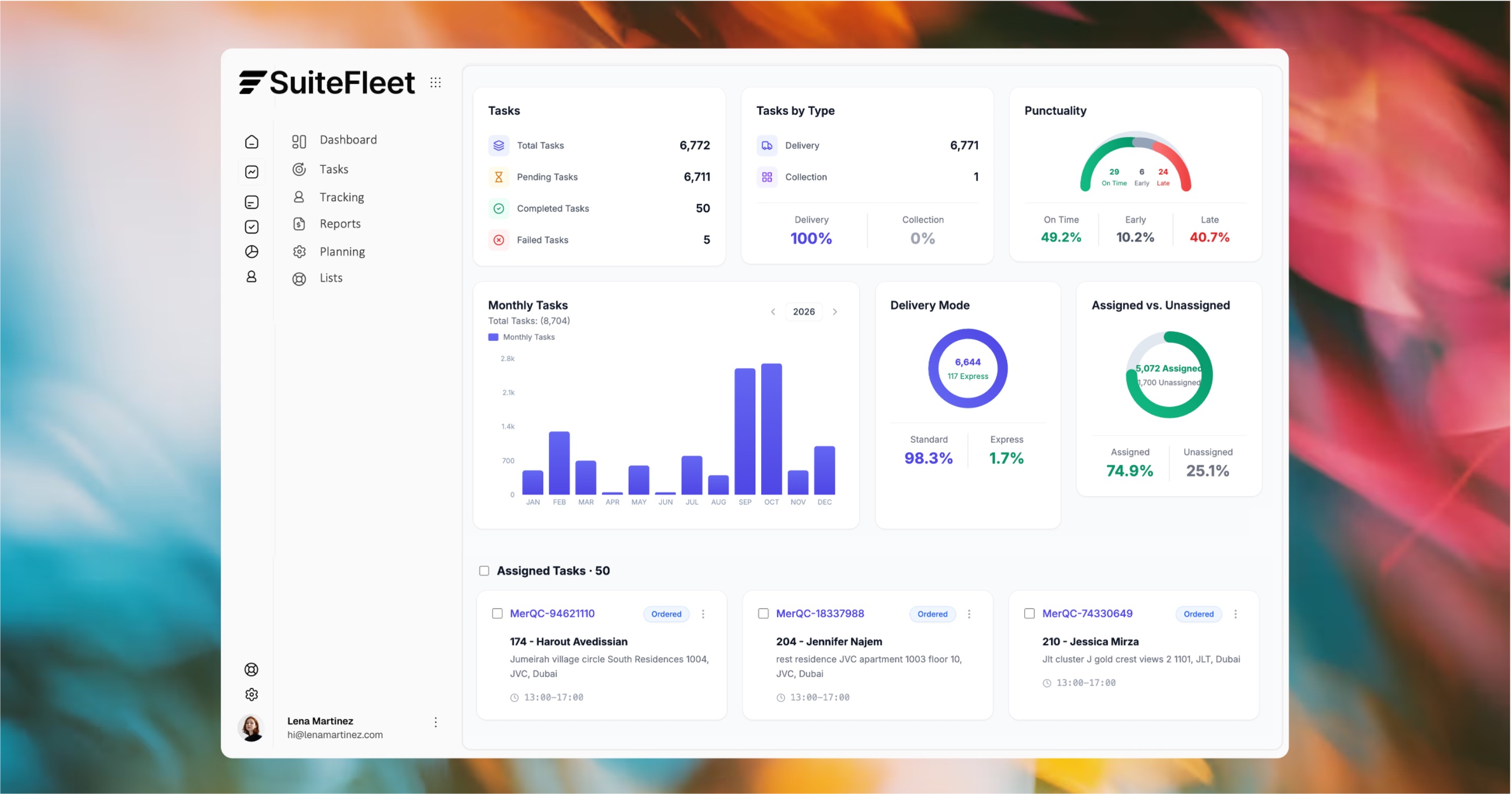

Sage tracks the money. SuiteFleet runs the last mile that earns it.

Who This Is For:
Small delivery businesses on Sage Business Cloud Accounting, Sage 50, or Sage Intacct currently dispatching by phone and spreadsheet, losing 2 to 3 hours a day to manual planning and invoicing.
Technical Integration Details:
Connects via API for cloud Sage versions, or scheduled data exports and middleware connectors for desktop versions. Delivery fees, costs, and completion data sync back to Sage automatically to trigger invoicing and expense tracking.
How It Works (steps):
- Delivery jobs are imported from Sage or entered directly, with fee and cost mapping configured once.
- SuiteFleet sequences all stops across available drivers for minimum drive time.
- On completion, invoices auto-generate in Sage and delivery costs log to expense accounts automatically.





.svg)


.svg)
.svg)
.svg)