.svg)
Salesforce Fleet Management — live tracking, maintenance scheduling, and driver performance synced to your CRM.
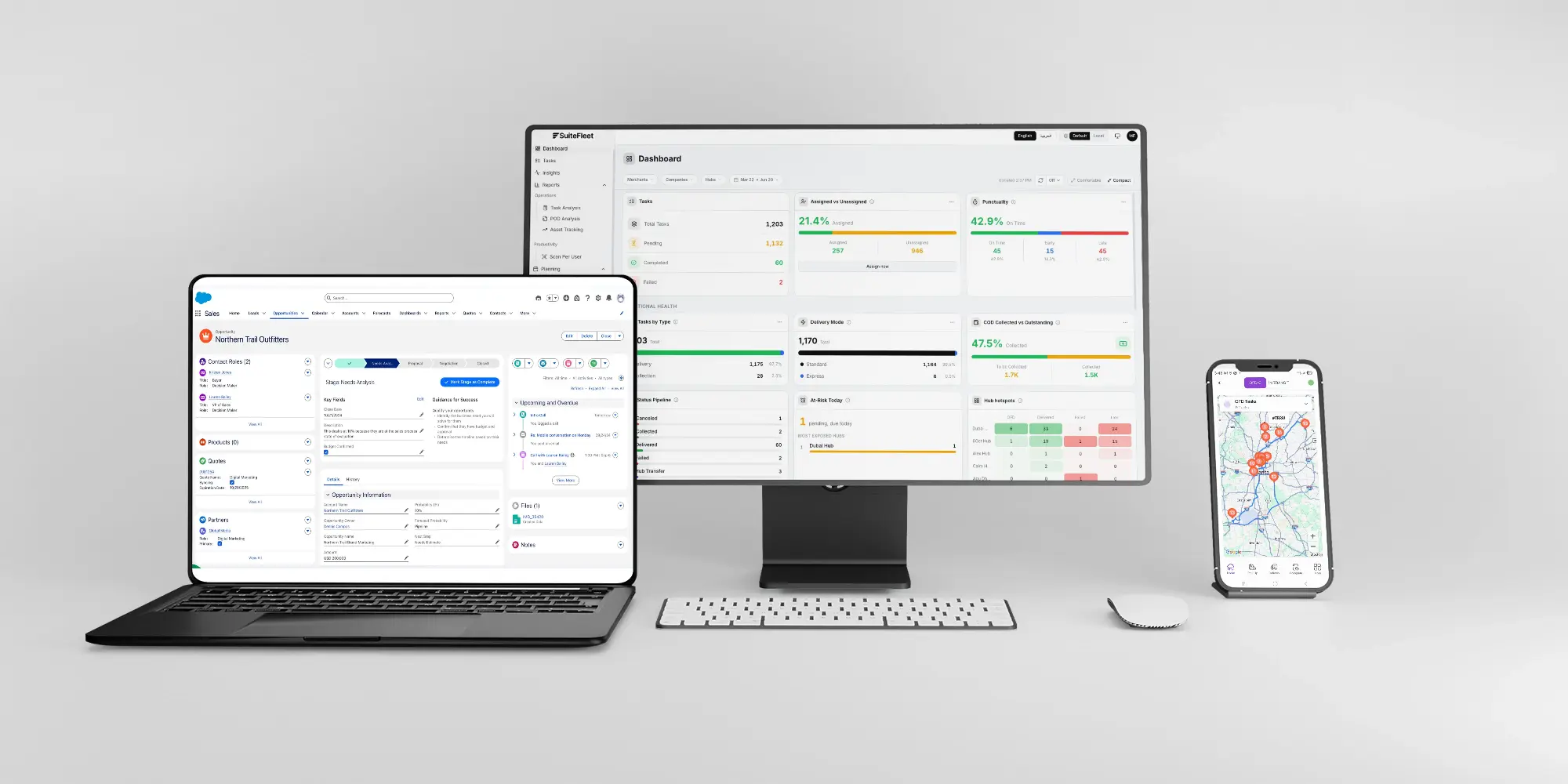
Field Service Lightning schedules one appointment at a time. SuiteFleet optimizes 40 to 80 last mile stops per driver simultaneously, synced back to Salesforce.

.webp)


What Salesforce Manages, and What It Cannot:
Salesforce Field Service Lightning schedules individual service appointments, one technician visiting one location at a time, with real depth. Last mile delivery is a fundamentally different problem: batch-optimizing 40 to 80 stops per driver simultaneously across a whole fleet. FSL has no batch dispatch capability, no consumer-grade tracking, and no way to calculate cost per delivery.
What Changes When Salesforce and SuiteFleet Are Connected:
- Order sync: orders, opportunities, or custom delivery objects from Salesforce flow into SuiteFleet's last mile layer automatically.
- Last mile batch optimization: the entire day's delivery workload optimized simultaneously in minutes, not appointment by appointment.
- Customer notifications: branded tracking pages and live ETA alerts replace Salesforce's internal-only status with a genuine customer delivery experience.
- Time window compliance: every stop sequenced to arrive within its promised window, with proactive customer notification of any change.
- Salesforce writeback: proof of delivery and outcome data sync back automatically, triggering configured Flows or Process Builder automations.
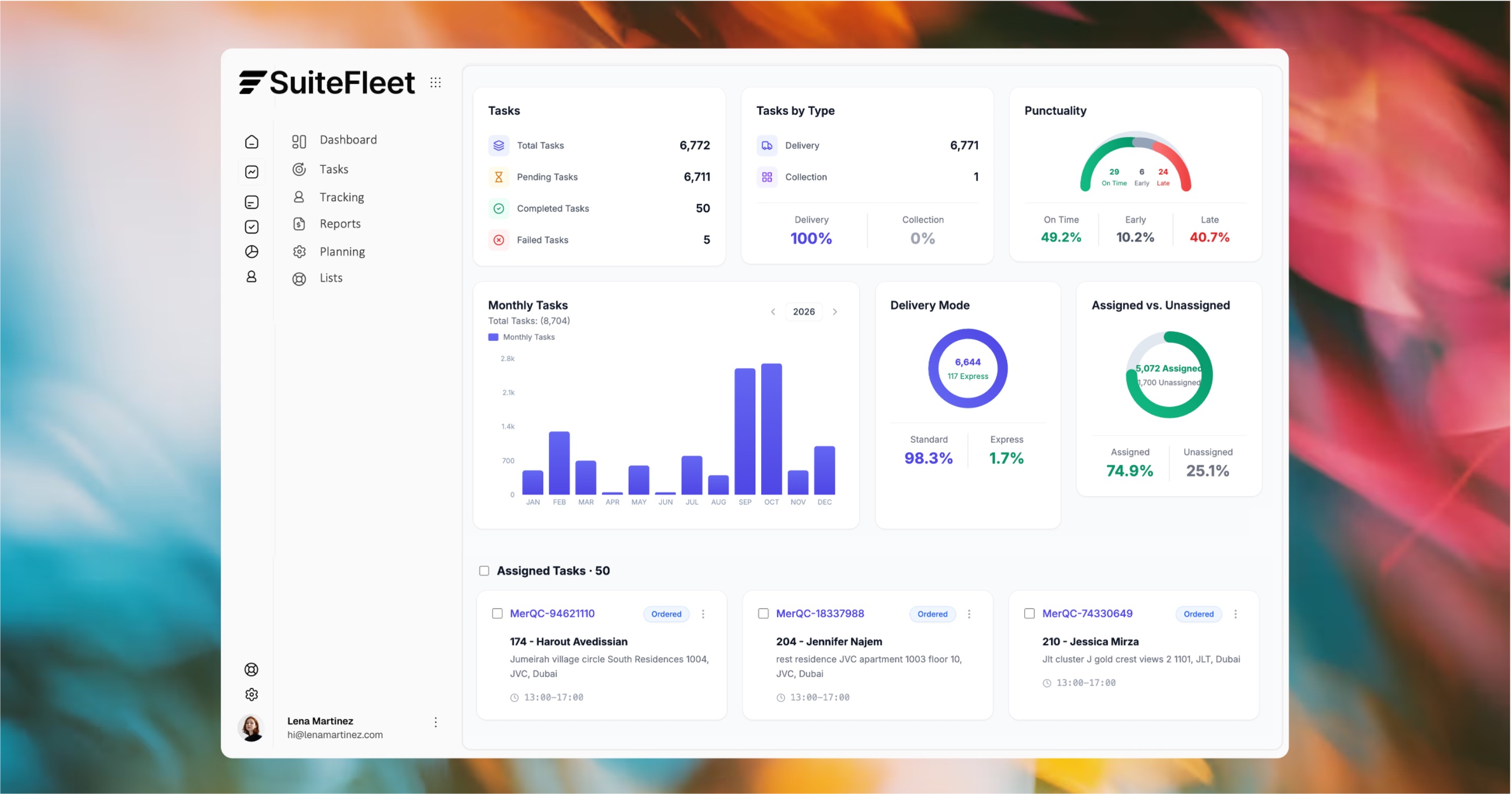

FSL schedules one appointment. SuiteFleet optimizes the whole last mile fleet.

Who This Is For:
Salesforce users running high-volume last mile delivery, typically 40 or more stops per driver per day, where Field Service Lightning's appointment model breaks down.
Technical Integration Details:
Connects via the Salesforce REST API. Orders, opportunities, or custom objects import as delivery stops with any field mappable to stop attributes, and delivery status, proof of delivery, and outcome data sync back automatically.
How It Works (steps):
- Orders or custom delivery objects with addresses flow from Salesforce into SuiteFleet.
- SuiteFleet batch-optimizes the day's entire delivery workload across all drivers simultaneously.
- Proof of delivery and outcome data sync back to the Salesforce record automatically.





.svg)
.svg)
.svg)